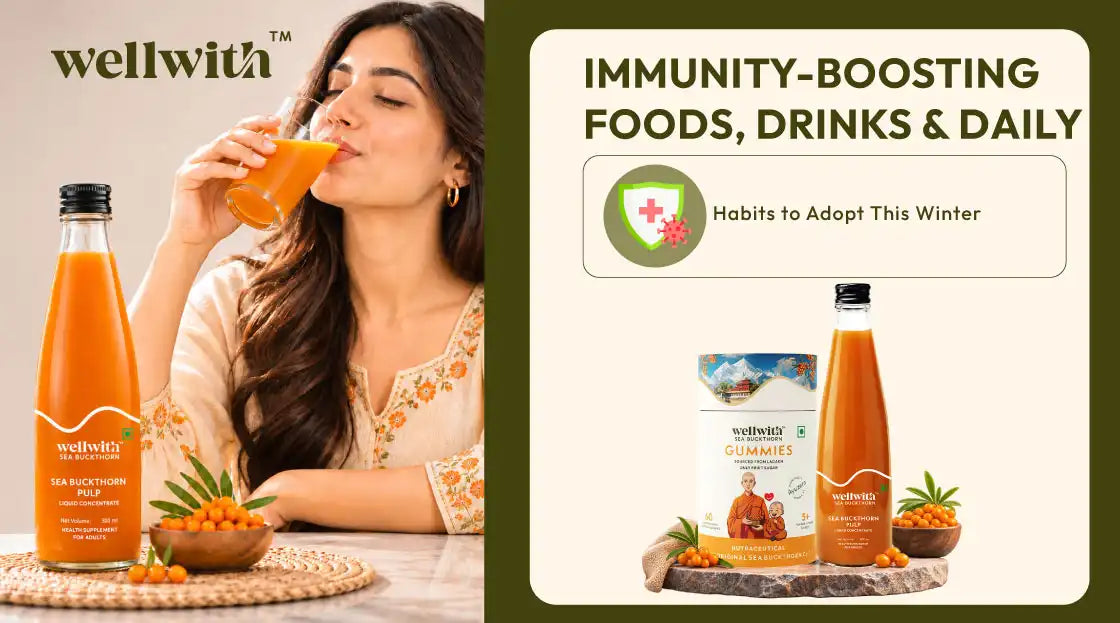

Winter is a busy time in India. Chai goes stronger, blankets become heavier, and everyone seems to have a cough.
Cold mornings, dry air and shorter days mean that our bodies are working much harder. This is why many of us automatically look for ways to boost immunity in winter. Luckily it doesn’t have to be complicated. Mostly it will come down to what we’re eating, drinking and doing between breakfast and bedtime.
In this article we’ll take you through some easy immunity boosting foods for winter, drinks to sip on, gut friendly habits and simple everyday routines. Nothing extreme. Just things that fit into a real Indian household.
Why Does Immunity Dip in Winter?
There isn't one main cause but it is often a combination of the following:
- Less sunlight: Decreased levels of sunshine means decreased vitamin D (a nutrient involved in maintaining a healthy immune system).
- More time spent inside meaning viruses can spread more easily.
- Dry and cold air can cause irritation to your nose and throat.
- Overconsumption of comfort foods such as fried snacks and sweet foods. Often we choose to eat these instead of eating plenty of fresh fruits and vegetables.
- Disrupted routines. It is very common to stay up late and miss out on walks during freezing weather.
Whilst there is no food or supplement that will guarantee you won't get any illnesses, maintaining a consistent diet and healthy lifestyle may help to support your body’s natural defences.
Immunity Boosting Foods for Winter You Can Start Today
These are all very easy to incorporate into your diet. Just make sure to include them regularly in your meals:
1. Citrus fruits and Amla
Oranges, mosambi, kinnows and lemons are the go to winter fruits. They contain high amounts of vitamin C which helps support normal immune function. Amla (Indian gooseberry) is fantastic too! Vitamin C supports many different immune cell functions (Carr & Maggini, 2017).
2. Green leafy vegetables
Sarson, palak, methi and bathua. All available in abundance in the winter months. These are great sources of folate, pro-vitamin A and fibre. A simple saag with some ghee will help comfort and nourish you.
3. Root vegetables
Carrots, beetroot and sweet potatoes (shakarkandi) are all great sources of beta-carotene. This will be converted to vitamin A in your body. This helps to maintain healthy skin and mucous membranes which act as a physical barrier to germs.
4. Nuts and seeds
Almonds, walnuts, pumpkin seeds and flaxseeds are great sources of vitamin E, zinc and healthy fats. Have a small handful daily.
5. Spices
Haldi, ginger, garlic, black pepper, tulsi and cinnamon all have been used in Indian cooking for centuries. Whilst they are not a cure all, they do add flavour, warmth and phytochemicals to your food.
6. Millets and wholegrains
Bajra, ragi and jowar are all warming and filling. Bajra rotis with some white butter are a classic winter dish. They are also good for your gut!
These can also be the best immunity boosting foods for kids in winter. Children catch colds faster, especially once school is back in full swing. But they're also fussy eaters. So how do you sneak in nutrition without a daily battle? Here are some simple tips:
- Make it fun. Colourful fruit bowls, vegetable parathas shaped like animals, or a smoothie with a funny name.
- Keep it warm. Soups, dalia, khichdi and vegetable upma are easy on small tummies.
- Use familiar flavours. A bit of ghee, jaggery or cinnamon can make healthy food more appealing.
- Offer nuts, powdered. Almond and walnut powder in milk or porridge is safer for younger children than whole nuts.
- Include curd daily. It supports their little guts.
- Check with your paediatrician. Before giving any supplement, always talk to your child's doctor first.
If your child refuses fruit altogether, some parents look at child-friendly options such as sea buckthorn gummies as part of an overall balanced diet. They shouldn't replace real food, though. Real meals come first.
Quick Winter Food Cheat Sheet
|
Food |
Key nutrient |
Easy way to eat it |
|
Amla |
Vitamin C |
Raw with salt, murabba, or in juice |
|
Oranges / Kinnow |
Vitamin C |
Fresh, not as packaged juice |
|
Palak / Sarson |
Folate, fibre |
Saag, parathas, soups |
|
Carrot / Beetroot |
Beta-carotene |
Salad, soup, sabzi |
|
Walnuts / Almonds |
Vitamin E, zinc |
A small handful as a snack |
|
Haldi / Ginger |
Plant compounds |
Milk, tea, dal |
|
Bajra / Ragi |
Fibre, minerals |
Rotis, porridge, chilla |
|
Sea Buckthorn |
Vitamin C(more than oranges and amla), Antioxidants |
Diluted juice in the morning |
Juices and Warm Drinks Worth Sipping
As much as what we eat, what we drink also matters. We often forget our fluids in the winter. However, drinking warm liquids will help keep your throat comfortable and hydrated.
Some great options include:
- Fresh orange or mosambi juice - Choose vitamin C rich juices. Best to choose ones that are not full of added sugar.
- Amla juice - This is a tangy and strong option. Dilute with water if it's too strong.
- Sea Buckthorn juice - These berries grow in cold high altitude areas of the Himalayas. They are known for being high in vitamin C and antioxidants. A small amount diluted with water makes this an easy addition to your morning routine.
- Haldi doodh (turmeric milk) - This is a classic drink to have before bed.
- Kadha/Herbal Tea - Tulsi, ginger, cinnamon and a bit of jaggery.
- Warm lemon and honey water - This isn't a cure but is gentle on the throat. Don't add honey if your baby is less than 1 year old.
Please note that fruit juice should not be used instead of eating actual fruit. Fruit juice has very little fibre and can be high in natural sugars. Try to have this in moderation, particularly if you are trying to watch your blood sugar.
Daily Habits That Quietly Support Your Immunity
Food is only one piece. Honestly, habits do a lot of the heavy lifting.
1. Get some morning sun
Aim for 10-20 minutes of morning sun. This helps your body produce vitamin D which is linked to having a healthy immune system (NIH Office of Dietary Supplements). If you think you aren’t getting enough then do a simple blood test and ask your doctor for advice.
2. Get a good amount of sleep
Most adults should be getting between 7-8 hours sleep, children will require more. Lack of sleep is one of the fastest ways to feel tired.
3. Get active
No gym required! All you need to do is have a brisk 30 minute walk, do some yoga or even climb some stairs. You want to keep doing gentle activity regularly.
4. Wash your hands
A boring tip but an effective one. Wash your hands before eating, when you get home and after sneezing.
5. Stay hydrated
Drink warm water, soups and herbal teas. Try to sip regularly throughout the day.
6. Layer up
This will help you stay comfortable in varying temperatures. Wear a hat and cover your ears when going out early in the morning.
7. Manage your stress
Try taking 5 minutes to do some deep breathing or write in a journal.
Here's another important thing many people don't know. A large part of your immune system is connected to your gut. The trillions of bacteria living there interact with immune cells every single day, and researchers are still uncovering how closely the two are linked (Wiertsema et al., 2021). So if you want to improve gut health naturally, it's worth starting this winter. Here's how -
- Eat fermented foods. Curd, buttermilk (chaas), idli and dosa batter, and homemade pickles can support healthy gut bacteria.
- Add fibre. Whole grains, fruits, vegetables, dals and seeds feed the good bacteria.
- Don't overdo sugar and processed food. They can upset the balance of gut flora.
- Stay hydrated. Even when you don't feel thirsty.
- Eat on time. Your digestion likes a rhythm.
Simple steps followed daily is the trick.
A Simple One-Day Winter Immunity Plan
Here is a sample routine:
- First thing in the morning: Have a glass of hot water with few drops of lemon
- Morning Meal: Besan chilla (vegetable) or porridge made of oats along with nuts and an orange
- Mid Morning Snack: A small glass of diluted sea buckthorn or amla juice
- Lunch: Dal, seasonal sabzi, bajra/whole wheat roti and bowl of curd.
- Afternoon snack: Roasted makhana or few walnuts and tulsi ginger tea.
- Evening meal: Light khichdi or vegetable soup with saag.
-
Before Bed: Haldi doodh and then go to bed on time.
This can be altered to suit your preferences, budgets and doctor's advice.
When to consult your doctor
Although eating the right foods and having healthy habits can help support your health, please see a doctor if you have had a fever for longer than a few days, trouble breathing, a constant cough or suffer from a long term illness such as diabetes, thyroid issues or heart disease. If you are pregnant, breastfeeding or taking regular medication please consult before adding any herbal products.
Final thoughts
Improving your immunity during winter doesn’t mean focusing on one superfood. Simply focus on eating seasonal foods, keeping active, sleeping well and being kind to your gut. Try to make 2-3 changes this week.
If you want to give yourself a helping hand then look at WellWith. We’re a modern health and wellness brand in India. We have sea buckthorn juice, gummies and other wellness products from the Himalayas to help you easily incorporate into your routine.
Disclaimer: This article is for general information purposes only. It is not intended to be a substitute for professional medical advice. Always consult with a qualified healthcare professional before changing your diet.
Frequently Asked Questions
1. How can I improve my immunity quickly?
Whilst there is no quick fix, consistency is key. Eating a balanced diet, getting enough sleep, being active each day, reaching for some sunlight and staying hydrated will help.
2. What fruits should I eat in winter?
Fruits such as berries, oranges, kinnow, amla, guava and pomegranate are great to eat. Most provide you with good sources of vitamin C and antioxidants. Kiwi is also a great option.
3. Can a healthy gut help my immunity?
Research has shown that immunity is greatly linked to gut health due to the large amount of immune tissue that can be found within the gut. Adding more fibre, curd and fermented foods will help.
4. Is it okay to take supplements?
Always focus on getting your nutrients from food first. If you are looking to take supplements then make sure to read the labels carefully, go with a transparent brand and consult with your doctor. Especially when giving to children or taking regular medications.