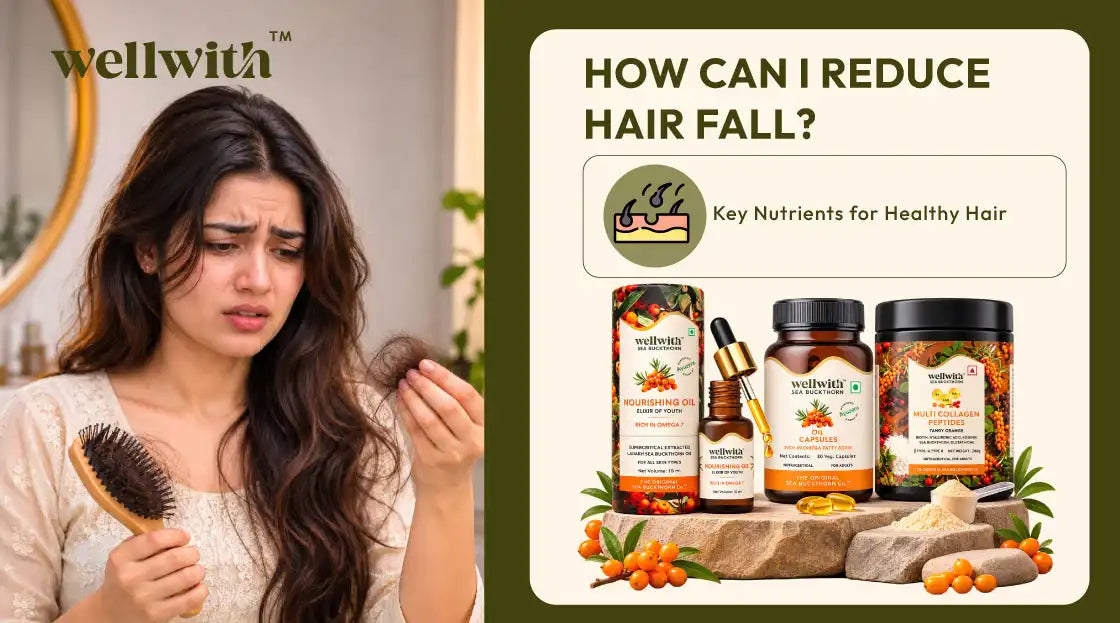

Strands on the pillow. A little clump in the shower drain. More hair on the brush than you'd like. It's unsettling, isn't it? And the internet doesn't help. One page swears by biotin, another by onion oil, a third by a ten-step routine.
Here's the thing. Hair is made of things we eat, so it makes sense to start by learning more about the right nutrients for hair fall. Here we will walk you through the nutrients for hair health that have real research behind them, the ones where evidence is thin, and what to discuss with your doctor before taking supplements.
Understanding Hair Fall vs. Normal Hair Loss
We all shed hair everyday. Your scalp has approximately 100,000 hair follicles and typically around 90% are in the growing phase (Almohanna et al., 2019). So a few strands on your comb isn't a crisis.
However, it is worth noting if:
- Shedding stays heavier than usual for several weeks
- Your ponytail feels thinner
- Your parting looks wider
- Hair comes out in patches or clumps
Stress, illness, crash diets, hormonal shifts and nutrient gaps can all play a part. Genetics matter too, and nutrition can't override them. What it can do is make sure your follicles have what they need to work with.
Key Nutrients for Hair Fall: What the Research Actually Says
A large review of Vitamins and Minerals in 2018 concluded that Vitamins D and Iron are most supported. However for Zinc, Riboflavin, Folic Acid and B12 there is not enough evidence to suggest they should be supplemented. Over-supplementation can be harmful due to excess Vitamins A, Selenium contributing to hair loss. (Almohanna et al., 2019).
A further systematic review in 2024 supports these findings by stating Vitamins B, D, Iron and Zinc play key roles in hair growth and maintenance (Wang et al., 2024).
This indicates that correct supplementation rather than mega dosing would be best. Let's go through each one for better understanding.
Protein
Hair is made up mostly of Keratin (a protein). When there is a very low intake of protein then changes to the hair will soon appear. Severe protein energy malnutrition has clear effects on the hair.
To make this simple, we can just add protein into each meal. This can be done via adding protein rich foods like Dal, eggs, paneer, curd, chickpeas, fish or chicken. For vegetarians, this can be done by including a good mix of pulses and grains throughout the day.
Iron
One of the most well studied deficiencies linked to hair loss is Iron. This deficiency is more common in females due to losing iron during periods. If you are suffering from hair loss and have low iron levels then supplementing would make sense under your doctor’s guidance.
Don’t assume! Check your Ferritin levels. You can get Iron from lentils, rajma, spinach, sesame seeds, dates etc. Try to pair with something high in vitamin C, such as Amla or lemon. This helps your body absorb the iron.
Vitamin D
Vitamin D has some of the most consistent data out of all the vitamins. Studies have shown that those suffering from certain types of hair loss have lower levels of vitamin D. This would include Alopecia Areata and stress related hair loss (Telogen Effluvium). If you have low levels then supplementing would make sense.
Sunlight in the morning, eggs and enriched milk will help. If you have low levels according to a blood test then your doctor can suggest how much to take.
Zinc
Zinc helps with cell growth and immunity. Deficiencies have been linked with certain types of hair loss. However studies have shown conflicting results with Zinc supplements for hair loss. There isn’t much evidence to suggest taking it if you’re not deficient.
An easy way to cover your bases is to eat Pumpkin seeds, chickpeas, cashews and whole grains.
B Vitamins (Biotin)
You will see B vitamins listed on almost every hair products label. Unfortunately there wasn’t enough data to suggest supplementing with Riboflavin, Folic Acid or B12. Biotin can also affect some blood tests so let your doctor/lab know if you are taking it.
Eggs, dairy, legumes and whole grains will give you a natural variety.
Omega Fatty Acids and Antioxidants
Here's a study worth knowing. In a six-month randomized trial of 120 women, a supplement combining omega-3 and omega-6 fatty acids (from fish oil and blackcurrant seed oil) with antioxidants (lycopene, vitamins C and E) improved hair density compared with the control group (Le Floc'h et al., 2015).
Two caveats. It tested one specific formula, and the researchers were linked to the company behind it. Still, it hints that healthy fats plus antioxidants deserve a place on your plate: walnuts, flaxseeds, chia seeds, fatty fish.
Vitamins A, C and E: Balance Matters
Vitamin A supports cell growth, but too much preformed vitamin A (usually from supplements) can cause shedding. Get it from food like carrots, sweet potatoes and leafy greens. Vitamin C earns its spot through iron absorption. For vitamin E, the evidence on hair is unclear, though nuts and seeds are good for you anyway.
Also may also like: Top 10 nutrient rich foods for hair growth
Quick Comparison: Nutrients for Hair Health at a Glance
|
Nutrient |
Why it matters |
Everyday food sources |
Keep in mind |
|
Protein |
Hair is mostly keratin |
Dal, eggs, paneer, curd |
Food first |
|
Iron |
Linked to shedding when low |
Lentils, rajma, spinach, sesame |
Test ferritin before supplementing |
|
Vitamin D |
Low levels seen in some hair loss |
Sunlight, eggs, fortified milk |
Supplement only if low |
|
Zinc |
Cell growth and immunity |
Pumpkin seeds, chickpeas, cashews |
Limited supplement evidence |
|
B vitamins |
Cell turnover and energy |
Eggs, dairy, legumes |
Biotin can skew lab tests |
|
Omega-3 and 6 |
Studied with antioxidants |
Walnuts, flaxseeds, chia, fish |
Results come from one formula |
|
Vitamin A |
Cell growth |
Carrots, sweet potato, greens |
Too much can backfire |
Where Sea Buckthorn Fits Into the Picture?
Sea buckthorn berries grown in the high altitude Himalayan region contain omega-7 as well as omega-3, 6 & 9 fatty acids. They also contain vitamin E and carotenoids.
Unfortunately there are not many clinical trials directly on sea buckthorn oil for hair growth. However, there are clinical trials looking at the effects of omega-3/omega-6 fats with antioxidant properties (as above) and sea buckthorn contains several of these nutrient families.
This should be classed as a complementary nutrient rather than a hair regrowth solution. You can use a light oil like WellWith Sea Buckthorn Nourishing Oil to condition your scalp and hair.
If pregnant, breastfeeding or taking regular medication, please consult a doctor before adding anything new.
The Antioxidants Angle: Glutathione
Glutathione is a small molecule produced within your body made up of 3 amino acids; cysteine, glycine and glutamate. It is one of the key protective molecules within your cells to help reduce oxidative stress. Oxidative stress occurs when there is an imbalance between free radicals and antioxidants.
Why does that matter here? Oxidative stress has been discussed in hair loss research, particularly in alopecia areata (Prie et al., 2015). That's the whole conversation behind the glutathione benefits for hair you may have read about: protecting follicle cells from damage.
Here's the catch. Most of this is lab work and theory. Good human trials showing that glutathione supplements regrow hair are still lacking, so be wary of big promises, especially around expensive injections or drips.
A more practical approach?
- Eat Protein-rich foods to provide enough cysteine.
- Onions, garlic and broccoli will provide sulphur compounds.
- Fruits and nuts will give you enough vitamins C & E to work with your bodies antioxidants.
Everyday Habits That Quietly Affect Hair Fall
- Poor diet: Extreme calorie or carbohydrate restriction can lead to hair loss.
- Stress & poor sleeping patterns: Stress related hair loss is very common but often only temporary.
- Harsh treatments: Tying your hair back tight, using high heat daily and vigorously towelling can all cause stress to the hair shaft.
-
Not eating regularly: Going long periods without eating means there isn’t much for your follicles to work with.
How to create a hair friendly diet?
Want something you can actually use? Try this:
- Protein at every meal
- One iron-rich food daily, paired with a vitamin C fruit
- A handful of nuts or seeds
- Colorful vegetables, including leafy greens
- Some morning sunlight
- A blood test before starting any hair supplement
When to See a Doctor?
If you notice any sudden excessive loss of hair, patchy areas of hair loss, discomfort or redness of the scalp, losing hair after an illness or new drug, or if your hair doesn’t seem to improve after around 3 months then make an appointment.
Ask to have your ferritin, vitamin D and thyroid levels checked. It’s best to know why your hair is causing issues rather than randomly trying products.
Conclusion
Healthy hair should be a result of consistent healthy lifestyle choices rather than a miraculous ingredient. Eating plenty of protein, ensuring you're getting the correct minerals, healthy fats, good sleeping patterns and seeing your doctor if something feels off are all key. If you're looking for sea buckthorn haircare products online to help with a simple and transparent regimen, we recommend starting with our hair range such as our Nourishing Oil from WellWith.
Disclaimer: The information provided by this article is for informational purposes only. This is not a replacement for professional medical advice. We recommend seeking advice from a qualified health professional if you are experiencing hair loss, or before taking any supplements.
Frequently asked questions
1. How quickly will I see results?
Hair takes time to grow, so you’ll need to be patient. Most clinical trials will be carried out for around 6 months when using hair supplements.
2. Will taking biotin prevent me from losing hair?
Usually not. It will help most if you are deficient (which is rare). It can also interfere with some blood tests so be sure to tell your doctor.
3. Can I maintain healthy hair on a vegetarian diet?
Yes! Ensure you’re getting enough iron (lentils, rajma, sesame), zinc (seeds, chickpeas) and vitamin B12 (dairy, eggs). If you are a strict vegan then be sure to ask your doctor if getting your B12 levels tested is something you should consider.
4. Is it safe to take hair vitamins everyday?
It depends on the product. Be sure to check the label. Try to avoid taking more than one source of vitamin A or Selenium as too much of these has been linked to hair loss. Your doctor or pharmacist can help you choose the right one.
5. Will sea buckthorn oil prevent hair loss?
There is no concrete evidence of this. It is a great source of good oils and antioxidants so can be used to support a healthy diet but won’t treat hair loss.