

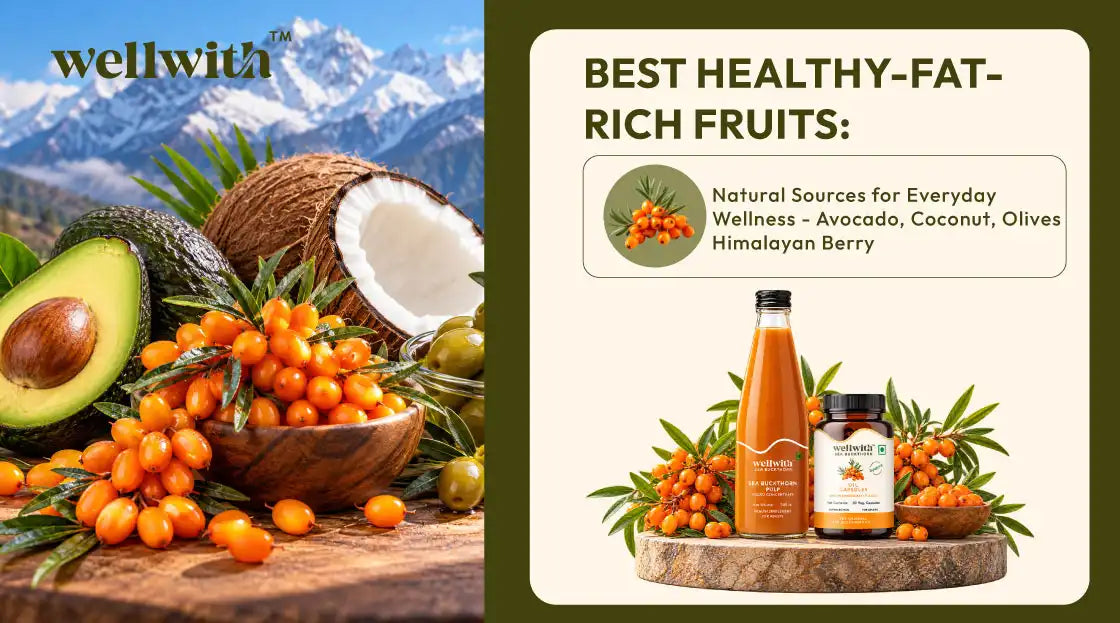

If you ask an average person to mention any fruit with a high fat content, most would give you a blank stare. Aren't all fruits supposed to be low in fat and high in natural sweetness? Well, here are some fat-containing fruits that don't follow these rules, and you should definitely try them out.
The thing is, for a very long time now, the wrong ideas about fats have been circulating. The quality of fats is more important than quantity. The consumption of foods high in healthy fats, which are primarily unsaturated fats, contributes to better heart health, vitamin absorption, and satiety. The fruits that contain these fats also come with fiber and other nutrients that a simple oil cannot give you. So which ones are worth buying? Avocado, olives, coconut and one tiny orange berry from the Himalayas all make the list below.
We will discuss what makes them unique, where the evidence exists, and where it is lacking. We will also discuss how to enjoy these fruits without consuming too many calories.
What Makes Fat-Rich Fruits Special?
Fruits are made mostly of water, sugar and fiber. Apples, guavas, oranges; all these fruits fall into this category. However, there are several fruits in which energy is stored not in the form of carbohydrates, but in the form of fats.
Different types of fats have different effects on one's health. While unsaturated fats generally reduce levels of LDL ("bad") cholesterol, saturated fats increase them. The American Heart Association's guideline on dietary fats summarized decades of clinical trials and found that replacing saturated fats with unsaturated fats reduces cardiovascular risk. Thus, reducing intake of fats is not the goal. It's choosing better fats. There’s also a second advantage that you might easily overlook. Vitamin A, D, E and K are soluble in fats, not in water. According to one study summarising research on Hass avocado, the consumption of avocados may improve absorption of fat-soluble vitamins and plant chemicals from other vegetables and fruits.
4 Healthy-Fat-Rich Fruits You Can Include in Your Diet
1. Avocado: The Unmistakable Entry Point
The champion in this class of superfoods is avocados, and it’s well-deserved. It contains 15 g of fats in a 100 g portion of avocado, mostly monounsaturated oleic acid, as well as fiber, potassium, magnesium.
But what does scientific evidence say about avocado consumption?
- In 2025, researchers conducted a meta-analysis of randomised trials and discovered that the consumption of avocados led to significantly lower levels of LDL cholesterol and systolic blood pressure but did not significantly impact triglycerides, HDL, glucose levels, body mass index.
- In a research involving over 100,000 adults, The National Heart, Lung, and Blood Institute noted that individuals who consumed at least two portions of avocado a week were less likely to suffer from heart-related diseases compared to others who rarely consumed it.
- Replacing foods such as butter, cheese and processed meats with an equivalent amount of avocado was also associated with a lower risk. Remember, however, this is still observational in nature.
Avocado easily finds its way into the Indian kitchen. Some simple tips to include it in your diet are:
- Mash it on multigrain bread with lime and chilli flakes.
- Mix it in your banana shake.
- Slice it to make a chaat style salad.
Half an avocado per day should be enough for most people as it is about 160 calories for 100gm.
2. Olives: Small, Salty, But Very Useful
Olives are classified as fruits, more specifically fat fruits. Here is its nutritional profile:
- Their fat content ranges from 10 to 15 gm in 100 gm depending on the type and the stage of ripening.
- The main component of their fats is oleic acid. It's the same monounsaturated fatty acid found in olive oil, the cornerstone of the Mediterranean diet.
- They also contain polyphenols, natural components of plants with demonstrated antioxidant properties.
But there is one important aspect: they are salty. Olives brined with water can be rather high in sodium content. This becomes particularly important when controlling blood pressure. So rinse your olives with water and stick to small portions of five to ten. Add them to your salads, whole wheat pasta, or tapenade with garlic and herbs.
It is important to note that most studies regarding cardiovascular health are performed using olive oil rather than fresh olives, hence the former has more research-based information regarding its benefits.
3. Coconut: Delicious, But Beware of Details
Coconuts are common in Indian food kitchens, hence it's important to be aware of the type of fat found in coconuts. Fresh coconut contains 33 g of fat in every 100g, and most of the fat is saturated.
This is the reverse of avocadoes and olives where the fats found are mostly unsaturated.
Why is this information important? It is because:
- Saturated fats cause increased levels of bad cholesterol. In the AHA advisory, the coconut oil was singled out as containing 82 percent of saturated fats.
- In addition, coconut oils increase LDL (bad cholesterol) in clinical trials and recommended that it shouldn't be used.
The advisory is based on coconut oil, but the fat contained in coconut is saturated and should count towards the daily intake limits.
Is it then advisable to stop eating coconut chutney? Definitely not. Use coconut in small quantities as a flavor and use avocado, olives, and nuts to get your fat content. Tend coconuts are an exception because they contain no fat. When your cholesterol levels are high, seek advice from a doctor on the appropriate amount of coconut consumption.
4. Himalayan Berry: A Must Try
Lastly, here is the less known item on the list. Sea buckthorn thrives in the mountainous regions of Ladakh, Himachal, and other parts of the Himalayas. These berries have a bright orange color and taste very sour; however, they are special in their own way.
The fruit provides two kinds of oils:
- One of them is seed oil, which is abundant with omega-3 and omega-6 fatty acids.
- The other type of oil is pulp oil, which is primarily made up of palmitoleic acid, which is an omega-7 fatty acid.
According to the article published in Lipids in Health and Disease, omega-7 is quite rare in nature, and sea buckthorn is among the few natural sources of this acid. The content of palmitoleic acid ranges from 30% to 40%. That makes it a standout among omega 7 rich foods. Smaller amounts turn up in macadamia nuts and avocado, but few plant sources come close to the berry's pulp.
Fresh berries are hard to find outside the mountains. Pulp-based products are the practical route, such as WellWith's Sea Buckthorn Juice (Pulp) or Omega 7 Oil Capsules. Check the label for the plant part used, since pulp and seed oils differ.
Quick Comparison of Fat Rich Fruits
|
Fruit |
Approx. fat per 100 g |
Main fat type |
Best way to enjoy it |
|
Avocado |
About 15 g |
Mostly monounsaturated |
Toast, salads, smoothies |
|
Olives |
About 10 to 15 g |
Mostly monounsaturated |
Salads, pasta (rinse first) |
|
Coconut (fresh meat) |
About 33 g |
Mostly saturated |
Chutneys, garnish, small amounts |
|
Sea buckthorn |
Varies by part and variety |
Rich in rare omega-7 |
Pulp juice, oil capsules |
How You Can Incorporate Foods Rich in Healthy Fats into Your Diet?
No major changes are needed. Just implement a few simple things:
- Substitute but don’t double up. Replace your butter and mayonnaise with avocado; you shouldn’t be using them anyway.
- Eat in pairs for absorption. Combine avocado slices or olives with your carrot, tomato or spinach salad to help absorb all the fat soluble vitamins.
- Be mindful of quantities. Healthy fats still have 9 calories per gram. A half avocado or a small amount of olives is sufficient.
- Eat natural sources, not processed foods. Always opt for the fruit rather than the spread or sweetened coconut product.
- Keep everything else in balance on the plate. Grains, pulses and vegetables will take care of the bulk of nutrition. The fruits can contribute to the fats.
Who should be careful?
This list of fruits can be recommended for most people; however, there are cases when you should have a short talk with your doctor or registered dietitian:
- People suffering from Kidney disease: Avocados are rich in potassium, which should be reduced.
- Those who are on blood thinner medications: Avocados interact with the action of warfarin, while the sea buckthorn products are usually marked as not suitable for anticoagulants.
- Pregnant or breastfeeding woman: Consultation is needed before using concentrated supplements.
- People who have a latex allergy: In some cases, people with latex allergy are sensitive to avocados.
- People with high cholesterol or trying to lose weight: Carefully monitor portions of products, particularly coconut.
- Supplements and fortified foods should not replace medications and a healthy balanced diet.
Conclusion
Not all good sources of fats come in a bottle or a bag of nuts. There are avocados and olives packed with unsaturated fat along with fibre and minerals. Coconut offers taste and tradition, just in moderation. And then there is the mountain berry that is sour to taste and provides omega-7. Watch out for it as science progresses.
If you'd like to try sea buckthorn without hunting for fresh berries, WellWith's Sea Buckthorn Juice (Pulp) and Omega 7 Oil Capsules are made for exactly that. Use them alongside a balanced plate of foods rich in healthy fats, not in place of one.
Choose a fruit here and add it to your diet this week. Small steps work better than radical change.
FAQs
1. How much avocado is enough per day?
There's no official ideal amount. Studies have used anywhere from a portion a few times a week to about one avocado daily. Half a fruit is a reasonable, moderate place to start.
2. Are fat rich fruits fattening?
They contain calories, hence the size matters. But the fiber and fat content makes you feel full and avoid unnecessary snacking. The weight gain would depend on the total intake, not one particular fruit.
3. Is coconut water high in fat?
Not really. Fresh tender coconut water is basically composed of water and sugar and contains very little amount of fat. The fat content is there in the white flesh of coconut and in coconut milk/oil.
4. Can I eat Sea Buckthorn daily?
Yes it is generally safe to consume if you don't have any specific conditions which need doctors to consult before consuming sea buckthorn.
DISCLAIMER: The contents of this article are meant for informational purposes only and do not constitute any medical or legal advice. Consult a licensed medical professional in case of any health-related queries.


