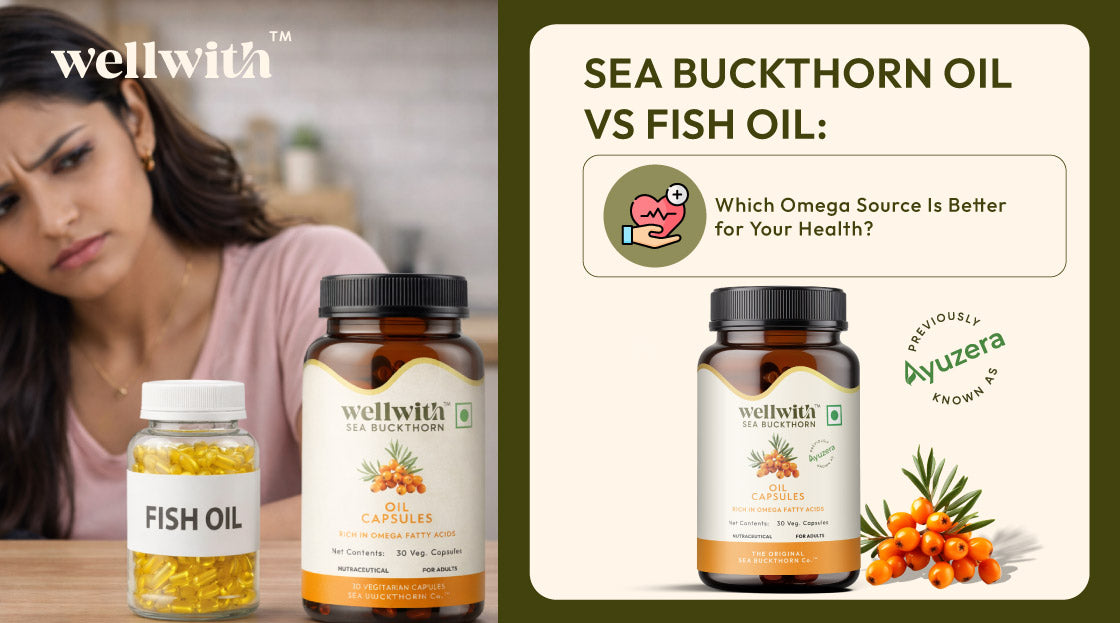

In a world where you can observe excessive adulteration in everything, people are inclined to natural supplements to pursue better health. Sea buckthorn and fish oil are now becoming the rising stars in providing essential nutrients required for our bodies, including rich fatty acids that support various aspects of wellness. If you are confused about choosing between Sea Buckthorn Oil and fish oil, this article explores their nutritional profile and health benefits to help you make an informed decision.
What Omegas Are Present in Sea Buckthorn?
Sea buckthorn contains all the fatty acids, such as omega-3, 6, 7, and 9, from different parts of the plant, among which omega-3 and 7 are extracted from seeds and berries. Sea buckthorn berry oil is rich in vitamin E, carotenoids, and flavonoids and also gives you the benefits of omega-7, or palmitoleic acid. Whereas its seed oil contains more omega-3 (alpha-linolenic acid), including a small amount of omega-6 (linoleic acid), phytosterols, and tocopherols.
What Omegas Are Present in Fish Oil?
Fish oil is derived from the tissues of oily fish such as salmon, sardines, mackerel, and anchovies and is mainly used for dietary supplements. It is a rich source of omega-3 fatty acids, containing EPA and DHA, which are directly used by the body. Fish oil also contains omega-6 and monounsaturated fats in small amounts, which can vary depending on the species.
Sea Buckthorn vs. Fish Oil: Nutrients For Your Health Goals
Aspects |
Sea Buckthorn |
Fish Oil |
|
Source |
Plant-based, extracted from different parts of the sea buckthorn plant. |
An animal product extracted from different species of fish. |
|
Processing method |
Supercritical CO₂ extraction. Cold-pressing. Solvent extraction. |
Molecular distillation Cold-pressing. Ethyl ester conversion. |
|
Nutrient content |
Contains all essential fatty acids, which include omega-3, 6, 7, and 9. |
All three fatty acids are present except omega-7 |
|
Omega 3 |
Contains ALA, EPA, and DHA, but in good amounts. |
Contains EPA and DHA in high amounts that are directly usable. |
|
Omega 6 |
Present in moderate amounts in the form of linoleic acid. |
Present in small or negligible amounts. |
|
Omega 7 |
Very high palmitoleic acid, present in sea buckthorn berry oil. |
Omega-7 is not present. |
|
Omega 9 |
Present in the form of oleic acid. |
Present, but in smaller amounts. |
|
Phytosterols & Flavonoids |
Contains a good amount that is beneficial for the heart and immunity. |
Traces are not available. |
|
Carotenoids |
It contains a higher amount, which supports skin health, lowers the risk of chronic disease, and enhances immune function. |
Present at a minimal level only. |
|
Vitamins |
It contains vitamins A, D, and E, with vitamin E present in higher amounts. |
Contains only vitamins A and D. |
|
Primary Function Support |
Beneficial for skin, wounds, healing, gut lining, the immune system, heart, brain, inflammation, and anti-aging. |
Improves heart health, eyes, brain, and inflammation management. |
What to Know Before You Choose Between Sea Buckthorn and Fish Oil?
Both supplements have similar nutritional profiles but in different proportions, which can benefit you in their own ways. Therefore, it is essential to know their key benefits and side effects to choose between sea buckthorn and fish oil for your daily consumption.
Sea Buckthorn |
Fish Oil |
|
Safe for daily consumption, but can cause mild digestive upset in high doses. |
Not suitable for vegetarians or those who have seafood allergies. |
|
Available in small soft gels or liquid oils that are easier to swallow. |
Some capsules are large in size, which can be difficult to swallow for some people. |
|
High doses can cause loose stools or interact with blood-thinning medications. |
Excessive consumption of fish oil can easily interact with certain medications and can thin the blood. |
|
Contains a higher amount of antioxidants that support brain functioning and overall health benefits |
Rich in DHA that supports brain function, improves memory power, and focuses. |
|
Good for dry skin, antiaging, and skin regeneration due to the presence of omega-7. |
Fish oil is not primarily good for skin benefits, as it is a rich source of EPA and DHA that support joint health and heart health. |
|
It has a sweet and tangy taste, making it a good option for vegetarians. And it doesn't give you an aftertaste like fish blubber. |
It gives you a fishy taste after intake, which can be a bit uncomfortable for some people. |
Also Read: Sea Buckthorn for Brain Health
Final Thoughts
Sea buckthorn and fish oil offer high health-supporting properties that serve different needs. Sea buckthorn and fish oil are best suited for the heart, brain, skin, mucosa, and inflammation. At the same time, sea buckthorn is a plant-based nutritional source, whereas fish capsules give you an aftertaste. So, why kill fish when you can get the same nutrition from plants? Ultimately, the choice is yours.
However, if you decide to go with vegetarian options (SBT), then always go with the best sea buckthorn brand, like WellWith, which supports your health goals. It is also advisable to check the potential side effects of sea buckthorn or consult with a healthcare professional.
FAQs
1. What are the main benefits of sea buckthorn oil?
The main benefit of sea buckthorn berry oil is that it contains palmitoleic acid, or omega-7, which protects against inflammation caused by free radicals and boosts the immune system.
2. What are the negative effects of fish oil and SB oil?
Sea buckthorn and fish oil are generally safe to consume, but if taken too much, or if you have any kind of allergies, they can cause some side effects. Like, fish oil can produce a fishy aftertaste for those who have problems with fish or seafood. However, SB oil and fish oil can also give temporary negative effects like bad breath, nausea, and diarrhea.
3. Are sea buckthorn oil capsules safe for daily consumption?
Yes, taking sea buckthorn capsules (made with SBT oil extract) daily as prescribed can offer benefits for skin, immunity, and digestion.
4. Is sea buckthorn oil better than fish oil?
Both provide enough nutrition for the heart, skin hydration, cognitive function, and more. However, the choice between sea buckthorn and fish oil depends on your preferences and health goals. But if you want to go with one, then sea buckthorn oil will be the best, as it is safe for vegetarians.
5. Which is better for heart health: sea buckthorn oil or fish oil?
Fish oil is highly effective in reducing triglyceride levels, which helps prevent heart disease. At the same time, sea buckthorn oil is effective in maintaining cholesterol levels and protecting antioxidants. Thus, sea buckthorn oil can be the best for vegetarians and non-vegetarians, and fish oil is good for non-vegetarians only.