
Sunscreen is a topical product found in various forms that protects the skin from harmful ultraviolet radiation, prevents sunburn and premature aging, and also prevents skin cancer. It works by absorbing or reflecting the ultraviolet rays with the help of chemical or physical filtration systems. In this article, we will be talking about how to choose sunscreen based on key criteria, along with the required SPF and sunscreen benefits.
Benefits Of Sunscreen
-
Skin Cancer: Regular application of sunscreen significantly reduces the risk of developing deadly skin cancers, which include basal cell carcinoma, squamous cell carcinoma, and melanoma.
-
Premature Aging: It protects collagen and elastin from UV damage, thus preventing premature skin aging, such as wrinkles, fine lines, and sunspots.
-
Sunburns & Skin Issues: UV-B rays cause immediate damage to the skin. These rays are blocked by sunscreen, preventing painful sunburns, peeling, and blistering.
-
Even Toned Skin: Sunscreens prevent hyperpigmentation, dark spots, and melasma, keeping your skin tone consistently even.
-
Inflammation & Vessel Damage: It minimizes visible red, blotchy skin caused by UV-induced damage to small blood vessels.
-
Hydration & Health: Several modern formulas help protect the skin barrier for minimal water loss, thus keeping the skin hydrated.
Types Of Sunscreen By Mechanism
-
Physical Sunscreen: This type of sunscreen sits on top of the skin while reflecting and scattering the UV rays like a shield. It provides immediate protection and is ideal for acne-prone and sensitive skin. It is usually thicker in texture and may leave a white cast.
-
Chemical Sunscreen: This type absorbs the UV rays, converting them into heat energy, which is then released from the skin. It is lightweight, blends easily, and looks great under makeup. It takes about 20 minutes to activate and may irritate sensitive skin.
-
Hybrid Sunscreens: This is a combination of physical and chemical sunscreens to maximise the usage while reducing the disadvantages.
Types Of Sunscreen By Formula
-
Creams & Lotions: It is best for dry or normal skin as it provides hydration.
-
Gels & Sticks: It provides fast application and is ideal for oily skin and athletics.
-
Sprays: They cover large areas and are best for reapplication.
-
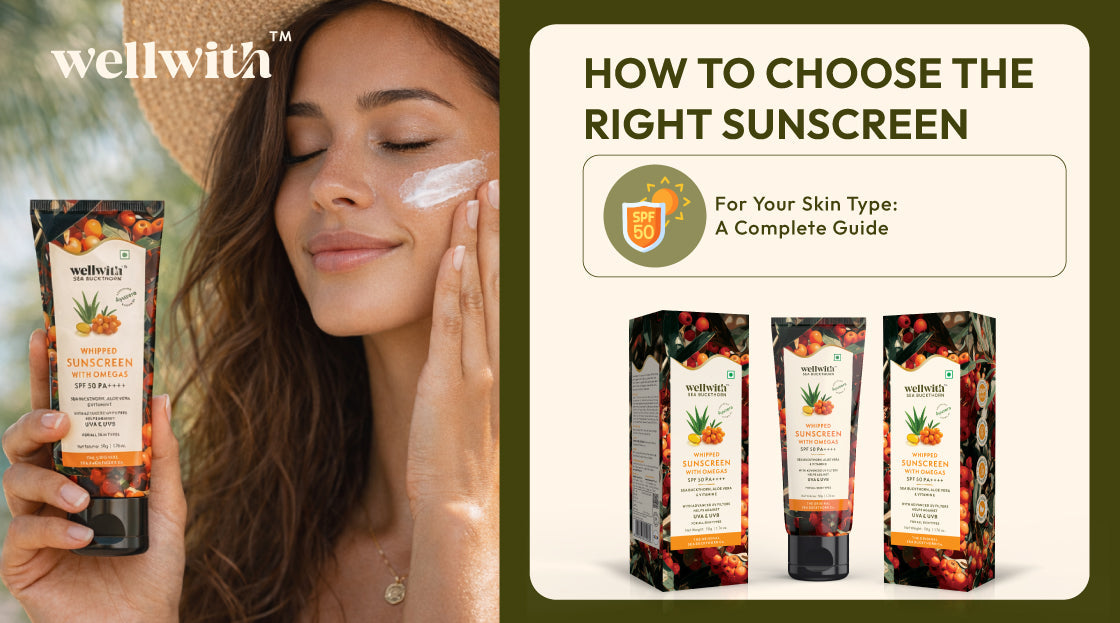
Whipped: This type of sunscreen holds high SPF and gives even coverage without leaving a greasy or heavy residue on the skin due to its lightweight and airy mousse texture.
How To Choose Sunscreen - Considerations While Purchasing
For All Skin Types
-
Sun Protection Factor (SPF): SPF protects the skin from UV-B rays. SPF 30 is essential; however, SPF 50 or above is good.
-
PA Rating (PA+/PA++/PA+++/PA++++): This indicates protection against UV-A rays, with PA++++ providing the highest protection.
-
Spectrum: Broad spectrum protects against both UV-A (aging) and UV-B rays (burning).
-
Reapplication: Sunscreens need to be reapplied every 2 hours or immediately after sweating and swimming.
For Dry Skin
-
Texture: Cream- and lotion-based sunscreens are best for this skin type.
-
Ingredients: Hyaluronic acid, seabuckthorn, ceramides, and glycerin are key ingredients for added hydration.
For Oily & Acne-Prone Skin
-
Texture: Lightweight/gel-based sunscreens are best.
-
Type: Oil-free and non-comedogenic sunscreens are ideal, as they won’t clog your pores.
For Sensitive Skin
-
Texture: Physical or mineral sunscreens are ideal for you.
-
Specifics: Hypoallergenic, fragrance-free, and paraben-free sunscreen would work wonders to protect sensitive skin.
For Combination Skin
-
Texture: Lightweight lotions or gel-based sunscreens are best, as they balance hydration without being too greasy.
-
Ingredients: Sea buckthorn, haldi, aloe vera, and other plant-based minerals, proteins, and vitamins.
How To Choose Sunscreen For Daily Usage
-
Daily Wear: A lightweight SPF 30 sunscreen that suits your skin type is sufficient.
-
Outdoor Activities/Beach: A water-resistant or sweat-proof sunscreen with SPF 50 is best for outdoor activities or even a stroll along the beach.
-
Skin Concerns: In case of pigmentation, look for sunscreens with brighter ingredients like Vitamin C.
Conclusion
Choosing the right sunscreen is crucial to protect your skin in summer and winter as well. Based on your skin type, you can go with gel-based or buy whipped sunscreen SPF 50 online that provides a powerful and broad spectrum. It blends effortlessly and provides no white cast due to its airy mousse texture.
Whatever sunscreen you choose, you must go with organic ingredients. As a recommendation, you can check the WellWith store, a natural skin care brand in India that uses Ayurvedic and plant-based ingredients to prevent you from sunburns, premature aging, dark patches, uneven skin, and many other issues. Also, go through the key criteria before purchasing the right sunscreen so that your skin gets what it deserves.
FAQs
1. What is SPF in sunscreen?
SPF stands for Sun Protection Factor, which reflects the effectiveness of sunscreen on your skin. In other words, SPF denotes the numerical rating of sunscreen. For example, with SPF 30, you can stand 30 times longer in the sun compared to skin with no protection.
2. What is whipped sunscreen?
Whipped sunscreen is lightweight and non-sticky and helps you protect yourself from UVA and UVB. It even acts as a soft-focus primer under makeup, increasing its versatility and thus becoming increasingly popular nowadays.
3. Which is the best sunscreen for acne-prone skin?
Look for gel-based, fluid-based, or water-based sunscreen with SPF 50 to care for and protect your acne-prone skin from UV rays.
4. Which sunscreen is best for oily skin?
Sunscreen rich in hylauraunic acid, zinc, and natural minerals will be the best to use on a regular basis if you have oily skin.
5. What ingredients are used in WellWith sunscreen?
WellWith organic sunscreen is made with plant-based herbs, including sea buckthorn and aloe vera. It is rich in vitamin E, rare omegas, antioxidants, and beneficial minerals to provide enough hydration while being suitable for all skin types.