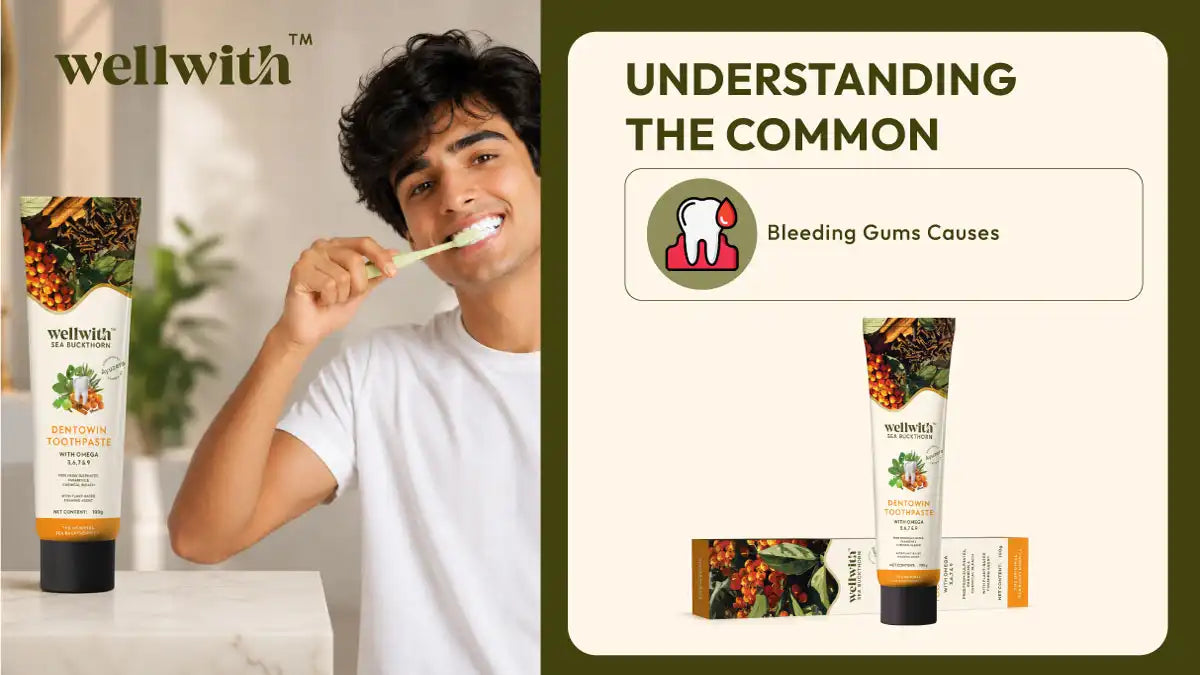

You’re brushing your teeth when, out of the blue, there’s a subtle pink hue in the sink. Those bleeding gums don’t happen by accident. They are the warning signs of your body showing you that something is not okay either regarding your brushing technique, hormones or gum disease developing in a silent way under the surface.
Fortunately, there is good news. In most cases, this problem can be solved, and no special interventions are required other than changing your habits and toothpaste.
Understanding the Common Bleeding Gums Causes
Before jumping into conclusions, one must understand the whole situation; as bleeding gums are often a symptom rather than a problem. The causes behind it can be anything from a minor issue to one that should be referred to a dentist.
- Plaque accumulation and gingivitis: The most prevalent bleeding gums cause. Plaque is a bacterial coating of teeth that appears on them every day, and if plaque is not removed, it can irritate the gumline causing the inflammation called gingivitis. The main symptom of this condition is bleeding gums when brushing and flossing.
- Aggressive brushing and inappropriate toothbrush usage: Using too hard toothbrush or doing it improperly might damage gum tissue in an otherwise healthy mouth.
- Beginning a new habit of flossing: gums that are not accustomed to the process may bleed for up to a week after which they will get used to the procedure.
- Hormonal shifts: pregnancy, puberty and menopause all cause increased blood flow to gums resulting in bleeding due to the sensitivity of gums.
- Vitamin deficiency: a deficiency in vitamin C or vitamin K weakens the strength of gums and the blood vessels thereby making them susceptible to bleeding during brushing.
- Smoking and poor dietary practices: Both of these are known risk factors that prevent gums from being able to repair themselves.
- Medications: Blood thinners are one example of medication that cause bleeding gums and this must be informed to the physician if the problem persists.
- Medical problems: in rare instances, bleeding gums may signify the presence of diabetes, problems with blood coagulation, or other medical problems.
In case gingivitis is not treated on time, it may develop into a more severe problem known as periodontitis, which damages the bones supporting the teeth. This is why bleeding gums should not be overlooked, even if the bleeding is slight.
When Bleeding Gums Signal Something More Serious?
Some cases aren’t as clear cut as finding a gentler toothbrush to use. It’s wise to take note if the following is what you’re seeing:
- There is frequent bleeding, not an occasional occurrence after a hard brushing.
- The gums appear red, inflamed or puffy even when you haven’t just brushed your teeth.
- There is a constant presence of halitosis in addition to the bleeding.
- The bleeding continues for over a week despite beginning a new regimen.
- The presence of pain, pus or loose teeth.
Any one of these conditions is reason enough to seek dental help rather than relying on remedies at home. Gingivitis that has progressed to this point is reversible and can easily be treated if caught.
Daily Habits That Support Healthier Gums
Most of the care needed to maintain healthy gums comes down to consistency, not intensity. Following some simple advice can help you prevent bleeding gums.
- Brush your teeth two times a day with either a soft or extra soft bristled toothbrush, employing gentle circular movements rather than vigorous side-to-side ones.
- Floss your teeth at least once a day; if your gums bleed, don’t be alarmed because it will stop in about a week as your gums get used to it.
- Let the toothpaste sit on your gums for a moment before rinsing, so the active ingredients have time to work.
- Make sure you stay hydrated because saliva serves a protective role against bacteria that cause plaque formation.
- Reduce your intake of sugar and processed foods that give food to the same bacteria responsible for plaque formation.
- Go to the dentist for regular cleanings because only a dentist can remove the hardened plaque (tartar) from your teeth.
Why Herbal Toothpaste Deserves a Place in Your Routine?
Conventional toothpastes are made mainly to focus on one task: destruction of bacteria and elimination of bad breath by the help of artificial antibacterial substances. It is effective; however, not always. They do not help with irritated gums but sometimes they may contain some potentially harmful components, like coagulant agents; which may worsen the condition.
Herbal toothpastes employ natural antibacterial and anti-inflammatory properties, which are safer to use when your gum tissue is already inflamed.
The point of special interest here is sea buckthorn toothpaste. Recently, a scientific study in the Journal of Applied Microbiology was conducted, during which the activity of the mouthwash, prepared from sea buckthorn pulp oil was assessed against some strains of oral bacteria. These bacteria were known to cause inflammation of gums and were included in the list of pathogens responsible for periodontal disease, including P. gingivalis. The mouthwash demonstrated its antibacterial activity and completely prevented biofilm formation, while providing noticeable antioxidant activity. (See Research)
Testing carried out separately on an associated herbal toothpaste formula showed more than a 40% reduction in anaerobic bacteria found in oral niches; even within hours of brushing, with increased effect as more time elapsed. (See Research)
This is important since anaerobic bacteria are among the biggest factors behind the formation of plaques leading to the development of gingivitis.
The makeup of sea buckthorn berries accounts for their effectiveness. High levels of vitamins C and E, along with the four essential Omega fatty acids:a rare combination found in plants are present in sea buckthorn berries. It is a fact that the Omega fatty acids play a key role in nourishing the gums.
Also read: Herbal Toothpaste vs Regular Toothpaste
What to Look for in a Gum-Care Toothpaste?
Not all natural toothpaste brands are formulated with the same intent. There are some aspects that one should consider when looking at purchasing:
- If your intention is to avoid using synthetically-made products then it may be important to go for fluoride-free toothpaste, but this is purely optional.
- Go for actual botanicals, for instance, sea buckthorn, neem, clove or tulsi, and not just the "herbal" fragrance.
- Try to avoid products that contain tough sulphates as they are likely to make your sensitive gums become irritated and even drier
- Always opt for toothpaste that is intended for your gums rather than toothpaste that claims to whiten your teeth since both of these do not complement each other.
It takes time. Herbal toothpaste works gradually and not instantly, hence needs a period of some weeks to show results.
WellWith's Sea Buckthorn Toothpaste is built around this exact combination. Himalayan sea buckthorn paired with other traditional herbs used for oral care, formulated specifically to support gum tissue rather than just mask symptoms. It's fluoride-free and designed for daily use, including on gums that are already sensitive or prone to bleeding, since the goal is gentle, consistent care rather than an aggressive chemical approach.
Conclusion: Taking Bleeding Gums Seriously
Gum bleeding is fairly common, but you shouldn’t ignore it indefinitely. The causes are usually related to plaque, brushing technique, or hormones, and in most cases, it can be easily remedied. However, if you’ve been using a toothpaste with artificial antibacterial components and continue to experience gum bleeding, it’s worth giving a product containing ingredients that your gum tissue reacts well to a try: such as seabuckthorn. If the bleeding doesn’t stop even after two weeks of proper care, that’s when you should see a dentist.
Also Read: Herbal Oral Care
FAQs
1. Is it normal to experience mild gum bleeding when flossing?
Yes, this can happen in the initial stages of flossing due to adjustment of the gums to the practice, and it stops within a week. But if the condition continues for some time, it may be necessary to alert the dentist about the problem.
2. Can stress lead to harm to my gums?
Even though stress cannot directly influence the gums, it can indirectly lead to complications by affecting the immunity of the body and causing it not to fight bacteria that cause inflammation from plaque. People usually grind or clench their teeth because of stress.
3. How long does it take to get results from the use of herbal toothpaste?
Usually, it takes three to six weeks to observe results from the use of the paste, as it gradually acts. Also, people should consider their brushing and flossing habits in addition to using the paste.
4. Do I change toothpaste entirely, or do I use herbal toothpaste along with my existing toothpaste?
For most people, complete change will be sufficient enough, because the right herbal formula will help clean the teeth effectively while also providing the extra advantage of healthy gums. If you have any particular problem, such as heavy tartar formation, then it might be wise to consult with your dentist to find out if you require anything else.
5. Is gum bleeding always an indication of gum disease?
Sometimes, yes. It is possible that chronic and inexplicable gum bleeding may indicate a deficiency in vitamins, clotting issues, and even diabetes in rare cases, although most likely it is simply a case of gingivitis caused by plaque build up on your teeth.